23 February, 14
Our family attended a UCAM Murcia pro basketball game today. UCAM is a basement dweller, number 17 out of 18 teams. They were playing Unicaja, which is 4th in the league. What should have been a blowout ended up to be a nail-biter, right up to the very end. We lost 78-76.
I have spoken about basketball in Spain before. It is a different game, played more horizontally, something like women's basketball in the USA. You could make the argument that this is a more pure form of basketball, requiring more passing and better defense than the NBA's run and dunk methodology, but really that would be nothing more than an excuse for not having big enough players to make it a vertical game.
Several years ago, the Spanish player's unions got together and bargained for a rule that would limit the number of foreign players allowed on the court at any given time. The measure aimed to give Spanish players more slots to play, thus protecting their jobs. On the surface this makes sense. Who doesn't advocate protectionism for their own personal interests? Go ask a farmer if he wants the market for lettuce or beef flooded with low-cost competition from a third world country. The problem, however, is that competition always improves a market and that protection always smothers a market. Competition forces costs to drop and quality to improve. Think about how much your computer cost today, versus 15 years ago, and how much more powerful it is. What used to be a luxury is now a high quality, feature rich commodity, thanks to competition.
In a totally open, free market, the customer dictates everything. Demand pulls products through the system. If your tomatoes are good and relatively cheap, buyers will show up at your stall to purchase all of them. If you insist on charging more for the same product as your competition, you will be throwing a lot of rotten produce at bad actors.
American sports models aim to create a level playing field for all teams in a particular sport by sharing revenues among the teams and imposing salary caps. Baseball is the exception to the salary cap rule. By sharing revenues, small market teams, like the Oklahoma City Thunder and the Green Bay Packers, can be assured a chance to secure top talent and vie for championships. The Boston Celtics and Los Angeles Lakers have won a combined 33 of 71 championships. The other 24 teams share the balance. Many different teams have dominated in certain eras.
Historically, Real Madrid and FC Barcelona have garnered 48 out of the 57 ACB championships. The rest of the 16 teams share 9 championships. The league is whop-sided and shows no signs of changing. Spaniards like to point to the Olympics and say that they have the most competitive basketball country, other than the USA. What they fail to take into account is that Olympic basketball is almost an afterthought for American players.
If they want to truly know their level relative to the NBA, I propose a championship tournament, representing every major basketball league in the world. This will accomplish several good things at once. The NBA is always looking to open markets to garner more fans and revenues. The other leagues will be playing against the best, creating opportunities to grow and develop players.
Spain also needs to develop a better farm system for cultivating young talent. Any Spanish 10 year old can outdribble an American high school soccer player. The reverse is true in basketball. Implementing a strong system would change the basketball culture here and elevate the game.
Everywhere I look, I see the need for free markets, free trade and free opportunities to exploit those markets. I am a Capitalist and proud of it. China doesn't scare me near as much as protectionism.
Now if I can just convince the ACB to let me run the league...
Showing posts with label Capitalism. Show all posts
Showing posts with label Capitalism. Show all posts
26 February, 2014

27 November, 2013
Socialism vs. Capitalism
27 November, 13
A few years ago, Susan and I were visiting Spain. We were hanging out with Julio and Toñi and having a discussion about the merits of Socialism. Our discussion was taking place on the balcony of their beach house. Julio owns his own business. Toñi is an O.R. nurse in one of the best hospitals in Spain. They were at the beach for the month of August. Their kids have braces, which cost about a third of what they would cost in the USA. They have a nice house in La Alberca. The schools are great. I had to admit that this brand of Socialism wasn't too bad. What is not to like?
That was 2010. Now I live here, and I have studied more subjects than this one family. Not many people have the same lifestyle. Heck, most people in America don't have that kind of lifestyle. So what about the Average Jose? What is his life like?
In general life is pretty darn good here. Public services are efficient. The trash gets picked up. The lights stay on. The sidewalk gets swept everyday. The education and healthcare systems are excellent. They actually run pretty lean, from an administrative standpoint; much leaner than what I have seen in the USA. You can get a wonderful education all the way through a Master's degree at little or no cost. Many people here have taken advantage of that.
So what is missing? Our English class has peeled back the curtain a little bit for us. We have 15 students now, and about five of them are unemployed. They are all young and well-educated. Most of them have Master's degrees. Why can't they find work?
That is the big deal-breaker for me on Socialism versus Capitalism.
In pure Ayn Rand style Capitalism, nobody looks for a job. Everyone makes his own job. Ice Cold Capitalism allows people to starve on the streets, because hunger is a great motivator. When I have traveled to third world countries, such as Nicaragua and Peru, I have seen people living in landfills. They are some of the most creative entrepreneurs I have ever encountered, transforming trash heaps into marketable goods. Theirs is a barely existing lifestyle, but they are living, and doing so in a broken economy with little to no government.

Here in Spain, it is very difficult to open a business. They require reams of paperwork, and you must have a physical location and proper insurance. That sounds nice. They are trying to limit the risk of failure, but risk/reward is what makes businesses thrive.
Right now in America and all over the world, homegrown biotech labs are popping up everywhere. People are doing genetic experiments right in their very own living rooms. We will either all become zombies after the outbreak, or somebody is gonna cure cancer and ton it. Basement Economics drive innovation. Think Apple and Microsoft.
Risk is the fuel for the business engine, and Socialism, at its core, is risk-averse. Socialism seeks to protect every citizen, to provide a safety net, or better yet a safety belt, to keep you from falling in the first place. Let's just keep the high-wire two feet off the ground. Capitalism is like a bunch of teenage redneck boys, hollering out, "Hey! Y'all watch this!" In Capitalism, the role of government is not to protect every citizen, but to allow citizens to create their own economic protections or die trying.
So if you are a business owner here in Spain, you have a pretty good situation, because the government has erected artificially high barriers to entry for your competition. If you are a young, well-educated person looking for work, you are on the outside, looking in. The fact that so many young people have their degrees has created a classic Supply and Demand Economics equation. Demand for employees is low. Supply is high at 25% unemployment. Therefore the value of that education MUST drop. "Oh you have a MBA? So sorry, Maria has a PhD."

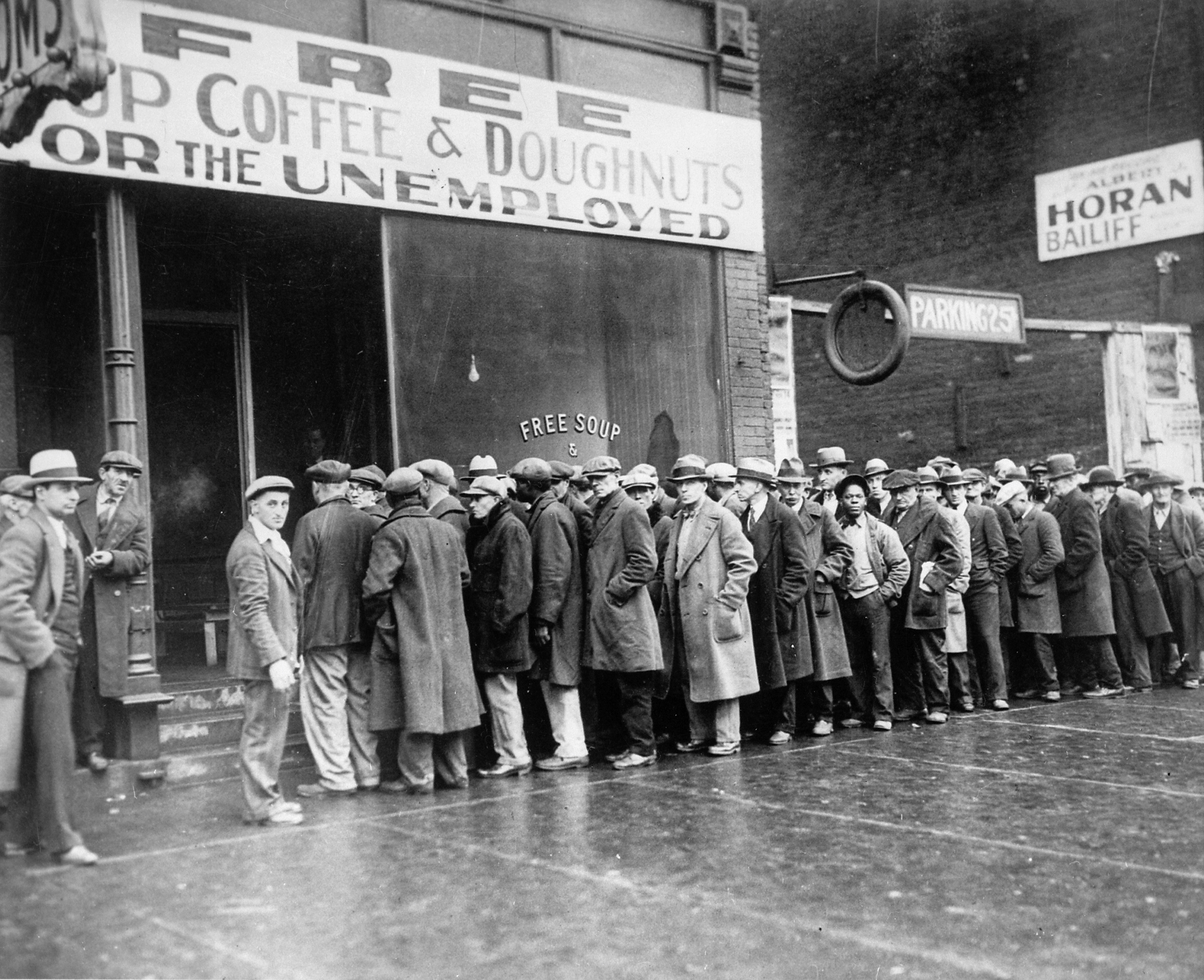
Another layer of complexity is the relative security government employees enjoy. They are the un-fireable. That is probably the case in any country. You never see a bunch of bureaucrats walking the bread line. So you have a bunch of well-educated people with no jobs, desperately looking for work and government workers with no incentive to work, desperately looking for another vacation.
 Now the economic driver in the European Union is the search for which country has the most free services, nicest climate and best lifestyle. It's not innovation, but preservation. Many Britons have moved to Spain, because Spain's healthcare is so good. Since they are part of the EU, they automatically have coverage. This created unintentional pressure on the healthcare system here, so Spain has changed its laws to make it tougher to get coverage. Our family is not privy to that free healthcare, and we have to pay for health insurance. We get better coverage and pay less than in the USA, so it's not all bad.
We cannot, however, start a business or get a job. In other words, we can spend money here, but we can't generate it. That's why America has more millionaires than anywhere else in the world. If you can make it to our shores, the sky's the limit.
Now if we could just import more of the food and wine from Spain...
A few years ago, Susan and I were visiting Spain. We were hanging out with Julio and Toñi and having a discussion about the merits of Socialism. Our discussion was taking place on the balcony of their beach house. Julio owns his own business. Toñi is an O.R. nurse in one of the best hospitals in Spain. They were at the beach for the month of August. Their kids have braces, which cost about a third of what they would cost in the USA. They have a nice house in La Alberca. The schools are great. I had to admit that this brand of Socialism wasn't too bad. What is not to like?
That was 2010. Now I live here, and I have studied more subjects than this one family. Not many people have the same lifestyle. Heck, most people in America don't have that kind of lifestyle. So what about the Average Jose? What is his life like?
In general life is pretty darn good here. Public services are efficient. The trash gets picked up. The lights stay on. The sidewalk gets swept everyday. The education and healthcare systems are excellent. They actually run pretty lean, from an administrative standpoint; much leaner than what I have seen in the USA. You can get a wonderful education all the way through a Master's degree at little or no cost. Many people here have taken advantage of that.
So what is missing? Our English class has peeled back the curtain a little bit for us. We have 15 students now, and about five of them are unemployed. They are all young and well-educated. Most of them have Master's degrees. Why can't they find work?
That is the big deal-breaker for me on Socialism versus Capitalism.
In pure Ayn Rand style Capitalism, nobody looks for a job. Everyone makes his own job. Ice Cold Capitalism allows people to starve on the streets, because hunger is a great motivator. When I have traveled to third world countries, such as Nicaragua and Peru, I have seen people living in landfills. They are some of the most creative entrepreneurs I have ever encountered, transforming trash heaps into marketable goods. Theirs is a barely existing lifestyle, but they are living, and doing so in a broken economy with little to no government.

Here in Spain, it is very difficult to open a business. They require reams of paperwork, and you must have a physical location and proper insurance. That sounds nice. They are trying to limit the risk of failure, but risk/reward is what makes businesses thrive.
Right now in America and all over the world, homegrown biotech labs are popping up everywhere. People are doing genetic experiments right in their very own living rooms. We will either all become zombies after the outbreak, or somebody is gonna cure cancer and ton it. Basement Economics drive innovation. Think Apple and Microsoft.
Risk is the fuel for the business engine, and Socialism, at its core, is risk-averse. Socialism seeks to protect every citizen, to provide a safety net, or better yet a safety belt, to keep you from falling in the first place. Let's just keep the high-wire two feet off the ground. Capitalism is like a bunch of teenage redneck boys, hollering out, "Hey! Y'all watch this!" In Capitalism, the role of government is not to protect every citizen, but to allow citizens to create their own economic protections or die trying.
So if you are a business owner here in Spain, you have a pretty good situation, because the government has erected artificially high barriers to entry for your competition. If you are a young, well-educated person looking for work, you are on the outside, looking in. The fact that so many young people have their degrees has created a classic Supply and Demand Economics equation. Demand for employees is low. Supply is high at 25% unemployment. Therefore the value of that education MUST drop. "Oh you have a MBA? So sorry, Maria has a PhD."
Another layer of complexity is the relative security government employees enjoy. They are the un-fireable. That is probably the case in any country. You never see a bunch of bureaucrats walking the bread line. So you have a bunch of well-educated people with no jobs, desperately looking for work and government workers with no incentive to work, desperately looking for another vacation.
We cannot, however, start a business or get a job. In other words, we can spend money here, but we can't generate it. That's why America has more millionaires than anywhere else in the world. If you can make it to our shores, the sky's the limit.
Now if we could just import more of the food and wine from Spain...
Subscribe to:
Posts (Atom)