Showing posts with label art. Show all posts

25 May, 2014

Mosiacs and Restaurants

12 May, 2014

We have traveled extensively over the past year, which is an incredible privilege. One of the challenges, however, is finding a way to engage our daughters, who have become somewhat saturated with "another cathedral" or "another museum". It makes me a little angry to even say that. I mean, they should be more appreciative of what they're getting, right? Whatever. Teenagers are the same all over the world.

One way of combatting teenage boredom on our vacations is to engage them in some family activity. Lately it has been art. In Barcelona, we attended a workshop with artist Martin Brown. He is actually British, but has been living in Spain for several years. He is a full time artist and has amazing talent. You can see pictures of some of his work on this post. I will also link to his website.

Martin creates incredible mosaics and hosts classes right in his little apartment. It was a real treat to be able to sit down with him and design a mosaic, while he watched over the process. Each person worked independently, using a box full of tile shards of various shapes and sizes.

We all hunkered down to our tasks and chatted with Martin along the way. He is an amiable guy who fell into mosaics after a pretty successful career as a textile designer in the fashion world.

After two hours, that felt like two minutes, we each had a little mosaic to take home with us. Of course, Susan and Katherine made some incredible pieces. Elizabeth's was very nice as well. Mine? Well, I completed the project. In the "everybody gets a medal" kind of way, I'm a winner too.

Truthfully, it was one of the funnest things we did in Barcelona, along with taking pictures of funny sounding restaurants, which has become another staple of our travels. Really the two go together in a weird, mosaic kind of way. All the experiences we have shared have served to shape and define our family. Each moment together is another piece that combines to make a whole. Our lives are nothing more than a composite of tiny little seconds. We must choose wisely how we place them in the framework of time.


Who wants a plate of pipin' hot dukey?

Bugs. It's what's for dinner.

I'll have the barf on brie, please. Oh and a wedge of vomit, if you don't mind.

30 April, 2014

Art Appreciation

28 April, 2014

No great artist ever sees things as they really are. If he did, he would cease to be an artist.

The purpose of art is washing the dust of daily life off our souls.

Before moving to Spain, art held a pretty low priority for me. I put visiting a museum up there with kissing a goat. It might be an interesting experience, but not one that I would venture to try twice.

Living in Spain has opened my mind to trying new things. No, I have not attempted any relations with a goat, but I have grown in my appreciation for the arts. Over the past two weeks, we have visited four top-tier museums, and I can say that I enjoyed all of them.

It is helpful to me to divide the art world into two categories--classical and modern. Those lines blur a little at the edges, but they serve their purpose in general.


The Prado in Madrid is a bastion of the classical world, comparable in style and collection to the Louvre in Paris. They have 2,000 year old sculptures and 600 year old paintings. Sculpture, especially of the human form, is almost magical to me. I cannot understand how somebody can transform a piece of hard marble into an object that looks so soft. My favorite at the Prado was Isabella II, Veiled, by Camillo Torreggiani. You can see a face behind a veil, all of which is carved out of one piece of stone. It appears to allow you to see through the stone veil.

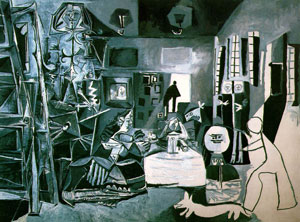
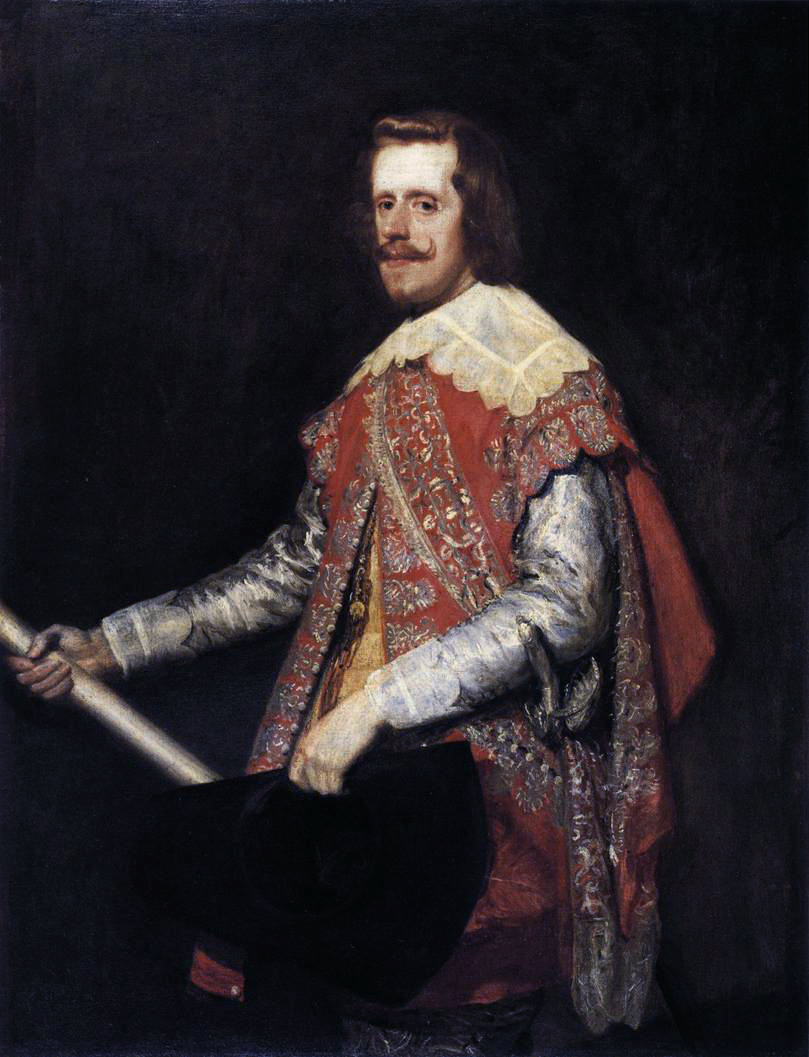
I also had the unique opportunity to view Felipe IV, by Velázquez. This is the same painting that a friend of mine's aunt is hoping to restore for a museum in Australia, prior to their purchasing it. This was not my favorite Velázquez painting, but it had an interesting story for me. Las Minenas also became a favorite of our family after visiting the Picasso Museum in Barcelona. By viewing the Velázquez first, we were able to understand, not only Picasso's version of the same painting, but also a little bit of Picasso's cubist style. 


I must confess that modern art quite often looks to me like nothing more than random splotches of color or haphazard doodling. Some of it, however, even made sense to me, which will no doubt relieve any consternation on the part of modern artists everywhere. Some of the pieces, to be sure, were simplistic, childish and downright stupid, in my humble opinion. Placing a few sticks against a wall and sticking a label on it does not constitute art, unless you are a good enough huckster to get the curator of Reina Sofia to display it.

Seeing such absurd displays makes me wonder if the creative juices have run out of modern art and into other venues, such as the digital sphere. Perhaps we are simply between great periods. Another possibility is that I am totally clueless.

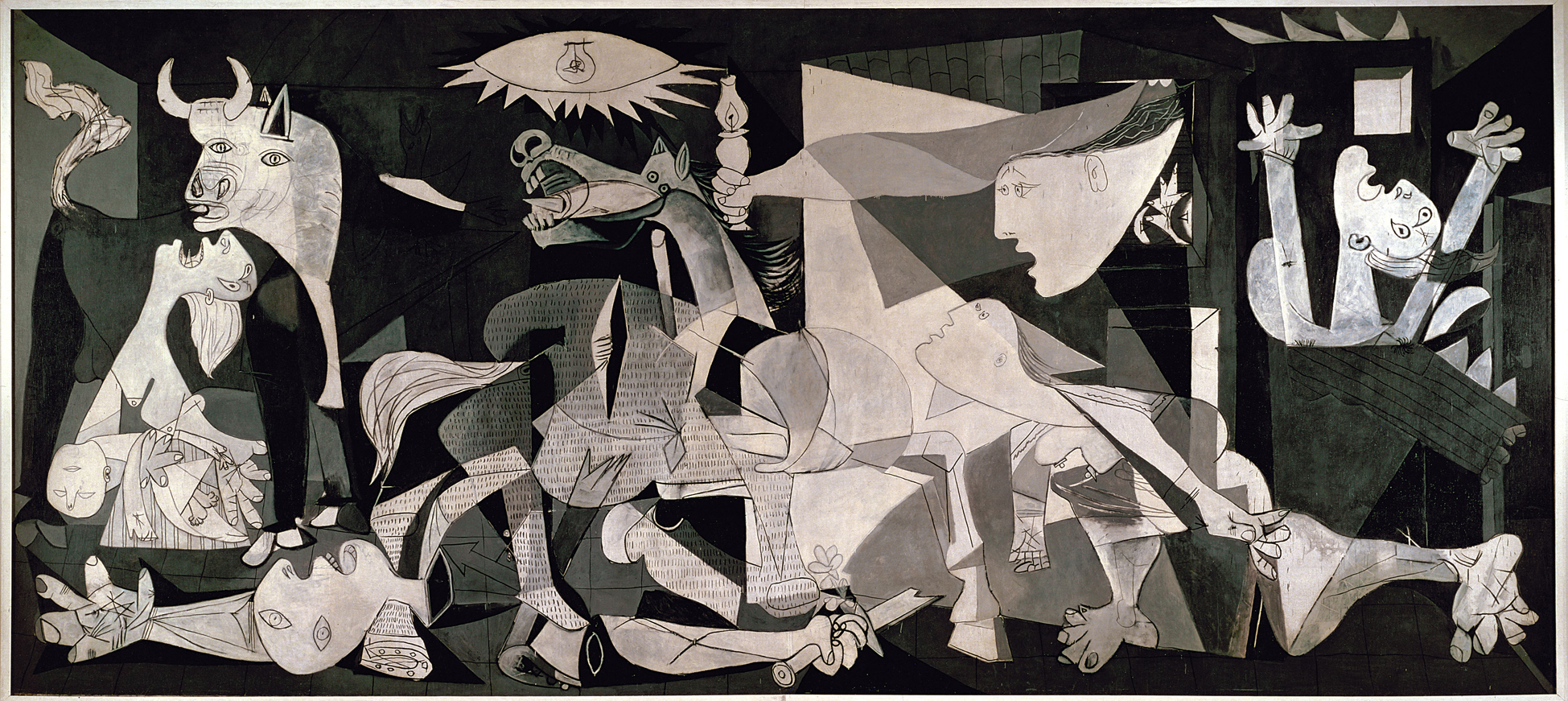
The one redeeming part of Reina Sofia is Guernica, by Picasso. He captured the truth of war by smashing his images into shards of horror, fear and destruction, painting in death-pale hues, leaving us hopeless and lost. You can read more about Picasso in my blog here.

Picasso

The Picasso museum presented us with a different view of the artist. He was classically trained and fully able to paint like the Masters. His genius lay in his ability to diverge from what was acceptable and known and to create a new language. As mentioned above, I have already written a blog about Picasso.

Guggenheim

The final stop on our Spring Break tour of Spain was in Bilbao. We were not prepared for the beauty of that fair city. It is difficult to weave antiquity and modernity in the same tapestry, but Bilbao has done it. Five hundred year old buildings provide the base fabric, while ultra-modern structures act as stylistic foils. The Guggenheim Museum is one of those splashes of color and style.

Sitting astride the river that runs through the city, the museum is home to some very avant-garde art, but they have accomplished the impossible by making it accessible to simple folks like myself. In a stroke of genius, the artists actually created their pieces unfinished without the interaction of an audience. In other words, the pieces are only complete when we interact with them. We literally became art. 

Ernesto Neto created sculptures, entitled The Body That Carries Me, out of netting and pantyhose material that took up entire rooms. You were allowed to crawl through, touch and even smell the exhibits. He filled several sacks with pepper, cloves and rice. It was something like an artistic jungle gym. His purpose was to make us think about our own bodies, and particularly our own skin, to help us see the beauty in the way it moves and functions.

Christian Marclay's The Clock is a fascinating 24 hour long video that captures time in real time. He has spliced thousands of films, each with references to time, that correspond to the exact time of day in which you are watching the film. It was fascinating to watch the movie unfold seamlessly along this unanticipated path. The next time you watch a movie, look for clocks. You will be amazed at the number of times you see time.

I learned a great deal about art on this trip, but even more importantly, I learned a great deal about myself. All art is intended to evoke a response. Whether you enjoy the response is not up to the artist, but to you. 


23 April, 2014

Pablo Picasso


22 April, 2014

Today we toured more of Barcelona, as part of our Tour of Spain, over the Easter holidays. The highlight for me was the Picasso Museum, which showcased some of his earlier works.

Pablo Picasso's father was a painter and started training him at age 3. He was a child star, the Michael Jackson of painting. By the time he was 12, young Pablo was being compared to the classic painters of antiquity. He said of himself, "It took me four years to paint like Raphael, but a lifetime to paint like a child."

Science and Charity--Picasso Age 15, Picasso Barcelona
Prior to studying some of his work, I had never appreciated Picasso's paintings, due mostly to my vast ignorance of art. He's still not my favorite, but I do have a much deeper respect for his talent.

Picasso's cubist style allowed him to take apart a picture and reassemble it, transforming people and things into shapes and colors. Once deconstructed, he could play around with the images like pieces of a puzzle. One of my favorite exhibits was Las Ménines. This was actually a Velázquez painting from 1656, which we saw at the Prado in Madrid. Picasso disassembled it and changed the colors several times. Each version took your eye to a different focal point, which was fascinating. Velázquez, as a realist, wanted to create an image that closely approximated life. Picasso, as a cubist, wanted to give the picture a life of its own, separate from the original figures.

Les Ménines--Velázquez, Prado Madrid


Les Ménines-Picasso, Picasso Museum Barcelona


We also saw Guernica at the Reina Sofia in Madrid, which depicts the horrors of war. Germany practiced blitzkrieg in April, 1937 on several Spanish towns as part of the Spanish Civil War. Guernica was one of the unfortunate targets of death and destruction. The painting was unveiled at the Paris World's Fair in 1937 and caused an instant sensation. Rich in symbolism, Picasso used his cubist technique to throw together several disjointed images into one collage of Hell. Everyone and everything suffers during war. The painting is massive, over 28 feet long and 11 feet high, commanding your attention. You cannot escape. The color and light reflect misery and pain, while the images convey true horror. I have not read anything about the name of the painting, but guerra means "war" in Spanish, so maybe there is a cruel irony in the fact that the Germans chose that city to bomb. Picasso dictated in his will that the painting would not reside on Spanish soil until democracy returned to the nation. The painting finally arrived home in Madrid in 1981, just in time to celebrate what would have been Picasso's 100th birthday.

Guernica--Reina Sofia, Madrid
Pablo Picasso used his art as a voice to speak about a variety of subjects. The true beauty of his art is that it still speaks today, even to a simple Redneck in Europe.

19 March, 2014

Lessons from Art Class

12 March, 2014

As part of a 30 Day Challenge, I have been drawing something everyday. Well, almost everyday. Visual art is not my bailiwick, but I am literally surrounded by others that are inordinately talented, which makes me want to be good at it too. Both Susan and Katherine have incredible abilities, and my mother and sister are also plunging ever deeper into watercolor and metalworking, respectively. A few things about this challenge have grabbed my attention.

Perspective is hard to master

One of my favorite doodles as a kid was drawing a cube. That and stars would fill the margins of whatever textbook I was supposed to be reading, while the teacher droned incessantly. The problem was that I never got it right. The angles wouldn't match up, so I always had a whop-sided cube. It was and is maddening. Lately I have been drawing the buildings and streets just outside my window. Like that episode where I tried to eat a spoonful of cinnamon, it seemed like a good idea at the time. Upon further review, I think choking on cinnamon dust is preferable to drawing in three dimensions.


It is difficult to gain a proper perspective on things, in art and in real life. Angles that look square aren't. Lines that appear to converge don't. Plans that seem so crystal clear get muddied by the reality of what you couldn't see from your distant, uninformed point of view. My daddy, who has a unique perspective on just about everything, said, "Boy, better the devil you know, than the devil you don't know." That leaves a lot of paths to explore. Is the safe, known, life the right option, or do other paths afford greater glory, peace or prosperity? How do you define those things, anyway? That's where perspective jumps up and bites you in the butt.

Perspective, once we understand how to use it, allows us to see farther down the road without allowing the view to become distorted by time or distance or what seems like a huge obstacle, simply because it is close to us. We can't always know what lies ahead, but we also can't let fear of the unknown stop us from pushing forward. Even looking back gets distorted over time, so all we can really do is live in the present. "Forgetting what is behind and straining toward what is ahead, I press on (today) toward the goal to win the prize for which God has called me heavenward in Christ Jesus." (Philippians 3:13-14, italics mine)

Nothing is as easy as it seems

When we were visiting Czech Republic last summer, we encountered a caricature artist on some famous bridge. We lingered behind the artist, and in a moment of crystalline wisdom, I told Katherine to watch how he made the faces. They all had a similar style. He was both a technician and an artist. Then I tried to draw something. Epic fail on a worldwide scale.

Katherine has been my art mentor over these last couple of weeks. She made me watch step by step videos by Shoo Raynor, one of her favorite artists. Then one day, she taught me how to draw an eye. I was mystified as it emerged from the paper, line by line, shade by shade, stroke by stroke. She literally showed me how to build an eye. As is the case with most naturally talented people, Katherine does not realize how complicated and difficult her artwork is to create. She just does it. Easy, right?
Katherine made this for her art class in about 15 minutes.


Katherine coached me on how to make an eye.
This is a Shoo Raynor mushroom

Most things are not easy at first. Crawling precedes walking, which precedes running, but running is definitely worth the effort, even with the inevitable, occasional fall. Vale la pena, it is worth the pain.

Life is mostly drudgery

Artists live a blissful, hedonistic, happy life. All they have to do is slap some paint on a canvas and sell it for a few million bucks to some nouveau riche tech billionaire. Not. None of my artwork is going to make it to an exhibition. Of that I am certain. What I have realized is that the process of drawing something, even the simple little doodles that I make is more perspiration than inspiration. When we visited the Louvre and Musee d'Orsay in Paris a few months ago, I was able to get close enough to the paintings to see the actual brush strokes. That's when I realized how much work went into a painting, especially Monet's Water Lilies, which encompass more than 1000 square feet of wall space in its own museum. True art is seeing beauty in the everyday and somehow communicating that in a way that a simple redneck from South Carolina can understand it, while at the same time captivating an art critic or fellow artist.

It really just comes down to hard work, which is boring and well, hard. Learning how to work, though, forges in us an ability and a belief that we can accomplish anything, and completing a difficult task is exciting, fulfilling and worth it.

My thirty day challenge has turned out to be a life challenge. I have drawn more conclusions than cubes, but isn't that point of art?

To make us think?

To challenge our assumptions?

To change us?

Excuse me, but I have another class about to start.


16 December, 2013

The Art of Translation

15 December, 13

My neighbor, Juan, is a native Alberceñan. He knows everything about this area, almost as well as Julio, but not quite. He has been telling me about several wineries in Murcia, in an area called Jumilla. Spain has a great reputation for wines, especially in Rioja and Ribera del Duero, so I was eager to check it out. We were supposed to go last Friday, but he asked if I could come over to his house to help him with something else first. So of course I was happy to oblige.

It turns out his aunt is a very well-respected art restorer. She is currently working on a Diego Velázquez portrait of King Felipe IV, of Spain, dating from 1623. A museum in Australia is looking to buy it for $1,500,000. She sent a proposal to them for completing the restoration, including an English translation. They sent the proposal back, saying the translation stunk. That's where I came into the picture.

Juan showed me what had been previously sent, and I was shocked. It was awful. Evidently, nobody is available in all of Spain to translate documents.

Juan and I sat at his computer and reworked the entire proposal. I started with Google Translate as an easy way to establish a foundation. Then I refined it, so that it would make sense. The biggest problem was in describing some very technical aspects of art, about which, I know nothing.

For example, the proposal included a description of x-rays and chemical analysis already performed on the painting, as a way of verifying its authenticity. The English translation said the first coat on the canvas was dirt and carbon. Maybe that is true, but I don't think so. We added some real technical sounding words, like organic soil compound.

If the picture ends up selling, I am looking for a 10% cut. We'll see.

I have also edited a friend's webpage. He has a very successful multi-national sign business, but his English version web page stunk. It took me about 20 minutes.

It is amazing to me how prevalent this problem is. I am starting to see opportunity...

13 December, 2013

Paris, Day 3

9 December, 13

It is really hard for our family to get out the door for anything. It is especially difficult when we are on vacation. Normally we can’t leave until about 11AM. That is sinful, I know, but it’s just reality.

We got into the island part of Paris, with plans to see St. Chappelle and Notre Dame. I am reading Hunchback of Notre Dame right now, so I was very interested to pick up any historical clues. Victor Hugo actually goes into great detail about Paris and how it evolved. Paris started on the two islands in the middle of the Seine. Hugo quotes Sauval, “The isle of the Cite is like a great ship foundered in the sand and breasting the middle of the water of the Seine.” Paris outgrew her bounds and formed two more parts to the whole—Universite and the Ville. “In the Cite abounded churches, in the Ville palaces, in the Universite, colleges.” (Hugo) Universite occupied the left bank of the river. This is where artists came to congregate, and how we came to know this section as the Left Bank. The Louvre is in the Ville section of town. It was Louis’ palace before completing Versailles. He left some of his art collection behind, which began the museum.


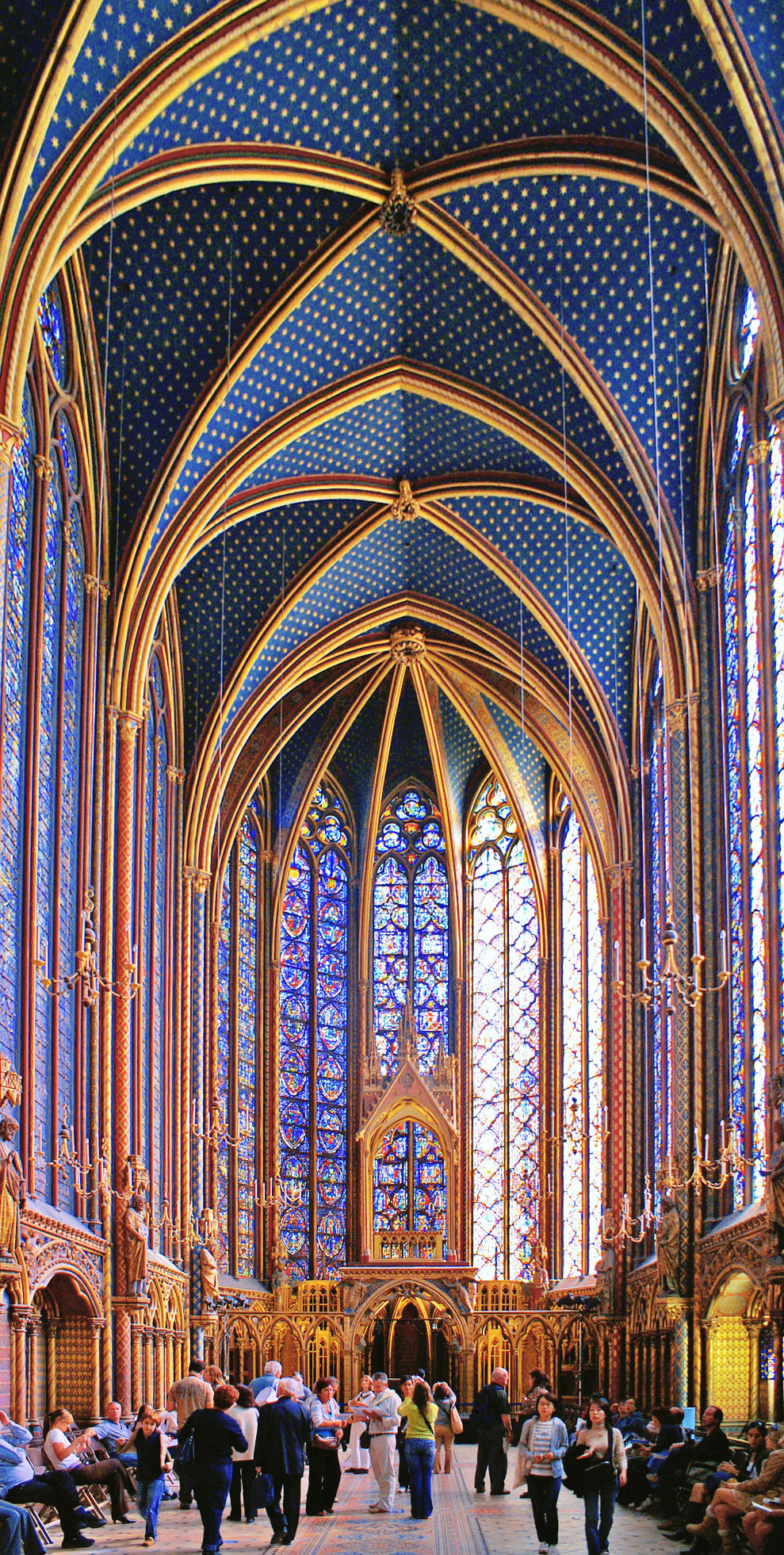
Our first stop was St. Chappelle. This is the home to the oldest stained glass in France.

I am sorry, but there is no way to give justice to the beauty of this building. The pictures aren't big or vibrant enough. Words cannot speak to the incredible colors emanating from every pane. The stories that each window tells is fascinating. I was reminded of my childhood at Wesley United Methodist Church. I used to love to look at all the stained glass, in lieu of listening to the sermon. My friend Don Fuller makes stained glass lamps and art. Maybe he could explain the intricate process of cutting each pane of glass and carefully placing it within the lead caming to form a magnificent mosaic. Who could design such a thing? It was incredible. 

They are restoring the glass right now, so they had a video showing the process. WOW! People did this stuff 800 years ago.

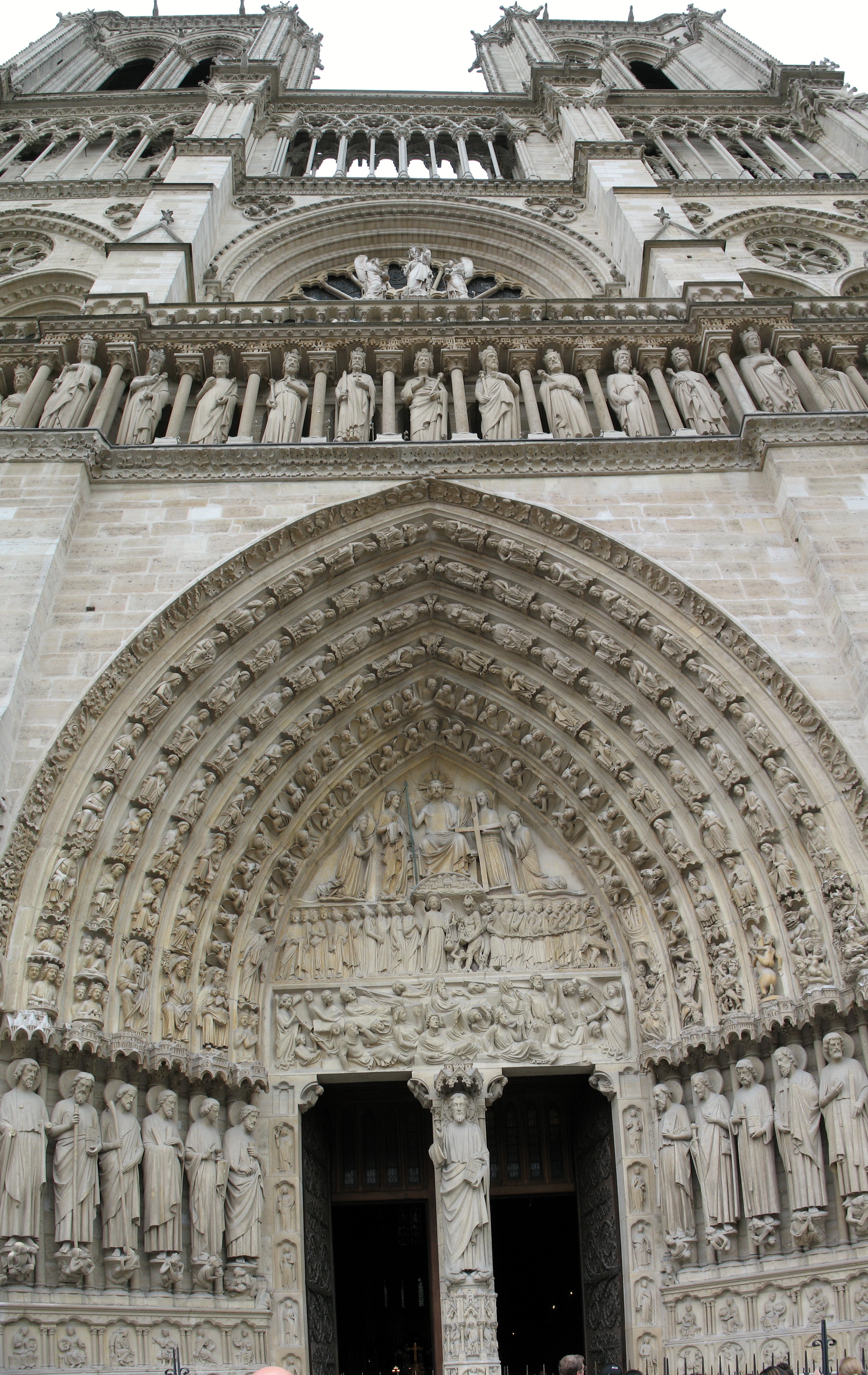
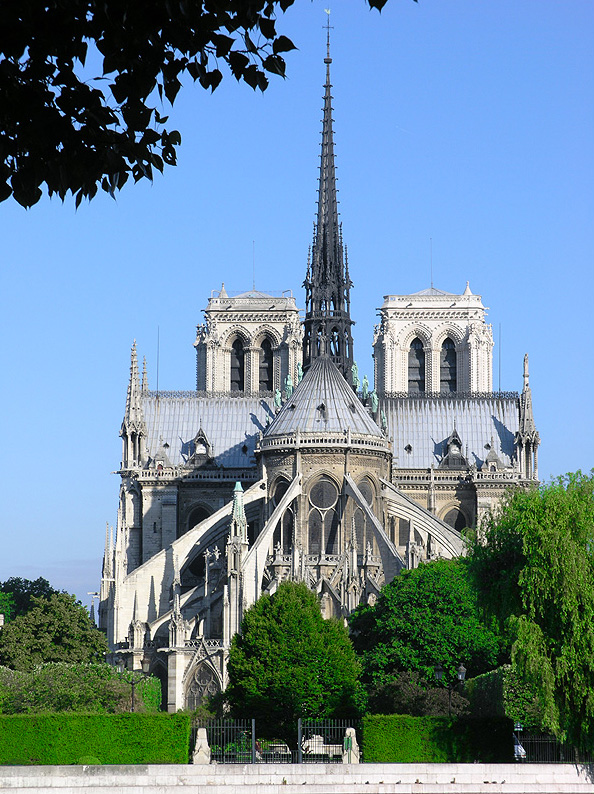
After we left St. Chappelle, we head over to Notre Dame. Victor Hugo talks about how it dominated the Paris skyline, and I can see how. It is awe-inspiring to walk up to this huge building. Your eye cannot take in all the detail. The longer you look, the more figures you see cut into the walls. I can't get my arms around what it must have cost in Time, Talent and Treasure to build something so grand. We just don't do that anymore. The closest example I can think of is putting a man on the moon. That only took 10 years, though.

The inside of the cathedral is just as grand in scope and scale as the outside. I found it interesting to look into each of the little side chapels along the exterior walls. You might find a relic or some famous painting or a rack of coat hangers. Evidently the only thing they didn't think of was storage. Typical architects.

Coming straight from St. Chappelle, which was awash in light and color, Notre Dame was almost like a cave in comparison, dark and monastic. St. Chappelle lifted our spirits. Notre Dame felt like a heavy weight on our shoulders. Everyone in the cathedral maintained silence, speaking in a barely audible whisper. Notre Dame has some spectacular Rose windows, but the light was not coming through them. I have visited cathedrals in several countries, and Notre Dame is by far the darkest and dreariest of them all. That shouldn't take away from its beauty or grandeur. It is just an observation.

The girls had been begging for ice cream the whole trip, so we finally relented and bought some very overpriced glace

Then we grabbed a taxi and headed toward Elizabeth's Mecca--Chanel. Coco Chanel is Elizabeth's idol. She wrote a biography of her for school a couple of years ago and actually enjoyed doing the research. We stepped into the main door and took pictures at the actual stairs Coco would use to display her latest works. Elizabeth was walking on air. The rest of us played along.

After our little dream time at Chanel, we headed over to the Eiffel Tower, where Susan had reserved a ride to the top. Our girls have become quite good photographers, and we have some amazing shots. Katherine has an app on her I-Pad that gives her a myriad of choices for filters and photo styles. She is really good at capturing a moment. Elizabeth has actually had training with a high quality camera and professional photographer, when we traveled to Nicaragua with Stop Hunger Now. The only challenge with Elizabeth is to get her to take a picture of something or somebody besides herself. We hung out on top of the Eiffel for about an hour, soaking in the beautiful City of Lights.


 After we descended the tower, we took a boat cruise on the Seine. That was something of a letdown. We were all tired, so sitting for an hour was a good thing. The ride was pretty boring, though, because the tour guide spoke very poor English. I actually had trouble determining if she was speaking English or French, so I read The Hunchback of Notre Dame on my phone instead. That suited me just fine.

We took the Metro back to Abbesses and found a nice little restaurant that served a fabulous meal to some hungry and tired travelers. It was a full day, but it was a great day.


12 December, 2013

Paris Day 1

7 December 2013

Today was a full day. We got a typical Askins late start this morning, because we had an equally typical Askins late finish last night. We finally went to sleep about 1:30AM, I got out of bed about 10:30AM. There are no windows in our Paris flat, so it’s hard to get any natural cues to wake up.

Susan found the apartment on CityCozy.com. Cozy is the word. That place took tiny to a new level. You could eat breakfast, eschew last night's dinner (the first "S"), shower, shave and sleep in one spot. We rested standing up, zombie style. That's the downside. The upside was it was only 90€/night and was in the middle of Montmartre, about 200 meters from a Metro stop and 500 meters from some incredible edibles in the Abessess area of Montmartre. SCORE! Really it was cool looking and hip. But not hips, because it wasn't that big. Sorry, couldn't resist.

Katherine has been dying to order 4 croissants. This is the direct result of studying French in Spain, so score one for the terrible parents, who wanted their kids to learn another language and experience different cultures. She and I left together on a hunt for breakfast. We took a left on our street and then a quick right up some stairs that emptied us onto a busy little street full of bakeries, delis and restaurants in the Abessess section of Montmartre. Both of us were like kids in a candy store. We bought food at three different shops, and Katherine did all the ordering. At the bakers’, she ordered croissants, pain du raisin, pain du pomme, and something chocalat. We got a café au lait at another stop and fresh squeezed jus orange at a third place. Tres magnifique!

After a great little breakfast in our flat, we all headed out to Musee d’Orsay. 
This is the red-headed stepchild to the Louvre, which gets all the press. I have to say, however, that I was very impressed with the place. It is a converted rail station, and is beautiful in its own right. They house an incredible collection of Impressionist and Post-Impressionist works, with such heavyweights as Monet, Manet, Renoir, Van Gogh and Cessanne. The Impressionists are my favorite artists. Their art is like eye-candy. It is awe-inspiring to stand in front of an original piece and to discern the brush strokes of the master. You can literally get within about 12 inches of the painting. One thing that was interesting to me was the amount of work many of these artists did together. Paris was an artists’ hotbed for a long time. I’m not sure where that place is now, but one day we’ll have a big museum dedicated to it.

We also visited Musée de l'Orangerie Les Nymphéas, which houses Monet’s magnum opus, Water Lilies. He donated these huge panels to celebrate victory over Germany in World War I. They are set in two adjoining ovular rooms that reminded him of the symbol for infinity. The effect is the feeling of being immersed in the pond amongst the willows and water lilies. The panels are immense, measuring 2 meters by 4 meters each. To make it even more incredible, Monet had double cataracts. He was almost blind. He was totally immersed in his passion, and we are the fortunate beneficiaries.


My favorite pieces of art are the sculptures. Sculpture, to me, is the art form that most closely resembles the work of God. In Genesis, it says,

So God created mankind in his own image, in the image of God he created them; male and female he created them.” (Genesis 1:27)

The Hebrew word for “created” is akin to fashioned or formed. God was the original sculptor.

Rodin, Degas and Bourdelle all had some impressive pieces. The best of show was Hercules by Bourdelle. He is wedged between two rocks, pulling back a huge bow. Every muscle is in tension. The shape of his face and the snarl on his lips are like an arrow, poised for flight. I did not like Rodin as much, because he seemed to overemphasize the limbs, making his works look out of proportion. But what do I know? I just read a nice article talking about Rodin.


It seems he would purposefully manipulate the anatomy of a body, to give the impression of movement. Very fascinating stuff. I grew to appreciate sculpture by listening to Willard Jacobs talk about the pieces he had made. Watching him craft busts of my niece and my daughter were incredible. He would literally build up the head from the skull outward, adding layers of clay muscle and tissue. The technical aspect of art is just as interesting as the creative side. It's really the only part of art that I can grasp, since I have no natural talent for it. 

Susan knew so much about each painter from teaching the pre-school art program at Sandhills Classical Christian School. I am continually amazed at her depth and breadth of knowledge. She kept chiming in little facts about the artists and paintings.

After we finished Orangerie, we walked along the Champs Élysées all the way to the Arc de Triomphe. We were all a little googly-eyed by all the stores and lights. 

The girls have been talking about the Eiffel Tower for weeks, and they finally got a good look at it from the Arc. Every hour, it starts twinkling for about 5 minutes, and we got to watch that from the Arc as well.

We finally headed home and hunted down the first restaurant we could find. We exited the Pigalle Metro stop, which is closest to our flat. It is also smack dab in the middle of the Sex in the City district. There is a venue for every stripe. We did find a bar that looked okay and ended up having an incredible meal. Everything works out.

It was an enchanted day.


11 November, 2013

The Redneck's Guide to Art


11 November, 13

This is my first blog that is written in both English and Spanish. Many thanks to Google Translate and my friends who have helped me learn this fascinating language. I apologize in advance for butchering it.


Yesterday, Susan and I went to Mercadona and MercaChina to buy a few things. While we were driving, we came across a graffiti artist. I have been fascinated by this art form in La Alberca ever since we got here. Really, ever since I was a kid, when I would see trains rumbling down the tracks laden with colors and words that were some sort of verbal and visual puzzle. 

In June, our family traveled to Germany. We saw many examples of amazing street art there. The Berlin Wall that separated East from West was a grand canvas for the West. Over 28 years the wall crumbled under the weight of freedom, signified by graffiti. Now the only sections of wall that still stand are left as a gallery for street art.

A big part of the attraction for me is the fact that graffiti is against the law. How can a painter complete these huge pieces over two or three days without being caught? Surely the police could see the work in progress. The painters are like Robin Hood, stealing walls from the rich and giving art to the poor. Instead of a sword, they have a paint brush or aerosol can. 

One painter here has captured my imagination. His nom de peinture is "Dolor", which means "pain" in English. What is his story? Why would he call himself Pain? When I ride to the mountains on my bicycle, I see many examples of his work on the streets. One street in particular is tagged with Dolor on both ends of it. It is a short street, and I call it the Street of Pain. This is a double entendre, because it is at the end of my rides, and I am usually in a great deal of pain when I finally get to the street. 

My first impression of graffiti was one of disdain, because I didn't understand it. I didn't understand art in general. I am a Redneck, after all. Now I think I like it for the same reason I like "Breaking Bad" and all the sports sponsored by Red Bull. They are counter-cultural, like me. Walking against the herd reveals "the why" about the way we live. Sometimes the normal path is the normal path, simply because nobody bothered to think of another way. We are too often like lemmings, rushing to our death, texting all the while. Sometimes the normal path is there because it is the right path, and the counter-culturalists become roadkill, trampled under foot by the crush of humanity. I guess that makes me a possum.

This graffiti artist, my new friend, walks against the herd. He is not brash or boastful. He doesn't want to fight. He simply walks to give people a vision of what might be possible. He paints the questions we are afraid to ask of ourselves. Maybe his art is a map to guide us. We simply need to learn how to read it.

Ayer Susan y yo íbamos a la mercado para comprar algunas cosas y MercaChina también. Mientras conduciendo a las tiendas, encontramos un pintor de grafiti. He estado fascinado con los ejemplos de grafiti desde llegué en La Alberca. De verdad, comencé a interesar muchas años pasado. Los trenes en la ciudad de mi nació se pintaron con palabras en muchas colores y con formas inusuales.

En junio, mi familia estaba en Alemania. Vimos muchas ejemplos buenos de grafiti. La pared en Berlín que separa este y oeste fue un gran lienzo.

Un parte de el atracción de grafiti para mi es porque la forma de arte es contra la ley. ¿Cómo puede un pintor completar su proyecto sin ser capturados? Necesitas dos o tres días a completar un proyecto. Sin duda, las policías pueden a ver el trabajo antes se finalización.  Los pintores son como Robin Hood, robando las paredes de los ricos y dárselo arte a los pobres. En lugar de una espada, tienen un cepillo de pintura o un bote de aerosol.

Un pintor aquí ha capturado mi imaginación. El nombre es Dolor. Dolor significa “pain” en inglés. ¿Por qué el tiene el nombre “Dolor”? ¿Qué es su historia? Cuando monto en mi bici, veo muchas paredes con “Dolor”. Un calle pequeño en particular tiene “Dolor” dos veces, al principio y al final, en letras grande. Yo lo llamo “El calle de dolor.” Este es un juego de palabras porqué, el calle es la última calle en mi ruta de bicis y normalmente tengo dolor en mi cuerpo. 

Mi primer impresión de grafiti fue desdén porque no lo entendía. No entiendo arte en general. Yo soy un Redneck. Ahora pienso que si me gusta grafiti por la misma razón que me gusta "Breaking Bad" y los deportes patrocinados por Red Bull. Ellos son contracultura como yo. Caminando contra el camino normal del tráfico revela muchas cosas acerca de por qué vivimos como lo hacemos. A veces el camino es el camino único porque nadie tuvo la osadía de preguntar por qué. A veces el camino normal es correcto y las contras se convierten en animales atropellados. Supongo que eso me hace una zarigüeya. 

El pintor de grafiti, mi nuevo amigo, anda contra los gentes, pero no para a luchar. Anda para a dar los gentes un visión de que es posible. Quizás pinta una mapa para nosotros. Simplemente necesitamos a aprender como a leerlo. 


You can find more pics of another artist at http://wakearte.blogspot.com.es/. You can also go to http://jhoez98.blogspot.com.es/2012/07/jhoez-siento.html